
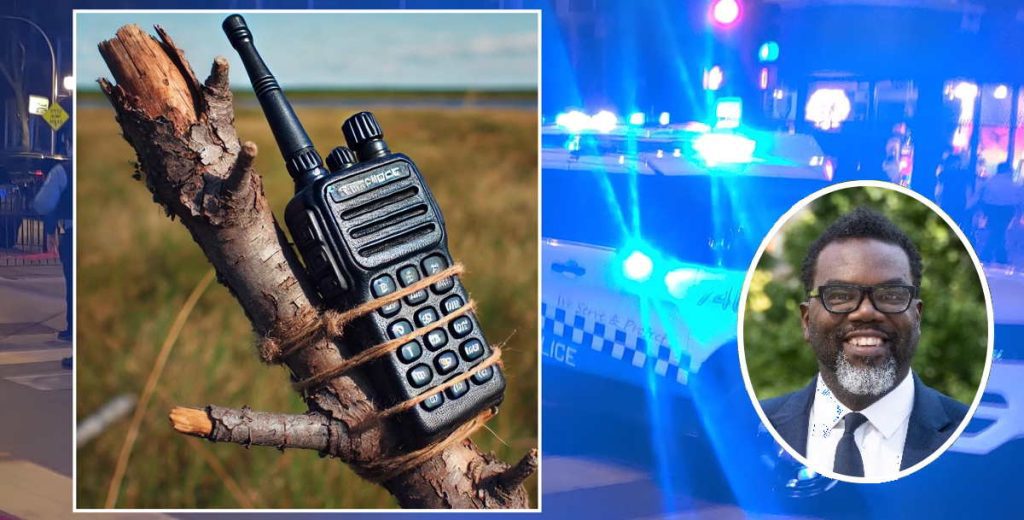
CHICAGO — Barely 12 hours after a ShotSpotter device directed Chicago police officers to a gravely wounded man who had been shot in the head, Mayor Brandon Johnson derided the technology as “walkie-talkies on a stick.”
The gunfire detection system will be turned off on September 22, a decision Johnson made earlier this year and continues to defend despite a recent survey that shows 70% of the city’s residents support the technology. By comparison, Johnson’s approval rating is at 25%.
Ralph Clark, CEO of ShotSpotter’s parent company, told CWBChicago that the company had given the city a proposal that could keep the system live in Chicago through next year “at a very attractive rate.” Without being specific, Clark said the city’s monthly fee would be “less than the monthly rate they paid this past go around.”
But there are no indications that Johnson is considering an extension.
In yet another example of the technology’s usefulness, Chicago police received a ShotSpotter alert of a person shot at 5647 South Throop at 2:06 a.m. Monday. An officer working the local police district’s intelligence center was able to pull up a surveillance camera feed and confirm that a man was lying unresponsive at the ShotSpotter address, police radio transmissions show.
CPD officers arrived on the scene 62 seconds after being dispatched to the call, well before any 911 calls were received. They administered first aid until EMS arrived, but, unfortunately, the victim, believed to be 19 years old, died from a gunshot wound above his right eye.
On Tuesday afternoon, Johnson dismissively referred to the life-saving technology as “$100 million for walkie-talkies on a stick,” NBC5 reporter Mary Ann Ahern tweeted.
In fact, ShotSpotter’s contracts have cost the city far less than $100 million, with recent annual deals priced at about $10 million.
Last week, the Chicago Tribune published a letter from members of the University of Chicago Crime Lab who said their research determined that ShotSpotter likely saves 85 lives per year in Chicago.
